
Does a New BCM Need to Be Programmed? What to Know Before You Replace One
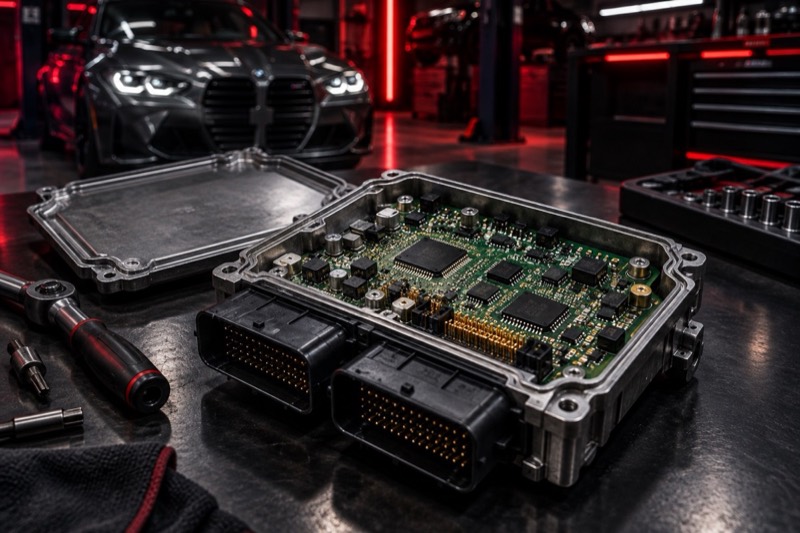
If a shop or a parts counter has told you your car needs a new body control module, the next question is usually whether you can just bolt one in. On most modern vehicles the short answer is no. A replacement BCM almost always needs some form of programming, coding or setup before the car behaves normally again.
Here is what the module does, why it needs to be matched to your car, and what to think about before buying one.
What the body control module actually does
The BCM is the computer that manages many of the “comfort and convenience” systems: interior and exterior lighting, power locks, windows, wipers, the horn, the alarm and, on many vehicles, keyless entry. Depending on the make and year, it can also be part of the immobilizer system and store information about which keys are allowed to start the car.
It talks to other modules over the vehicle’s network, so a BCM that isn’t set up correctly can cause problems that seem unrelated to it.
Common symptoms of a failing BCM
BCM trouble often shows up as electrical behavior that doesn’t make sense: lights that stay on or won’t turn on, locks that cycle on their own, wipers that misbehave, a remote that stops working, a battery that keeps going dead overnight, or warning messages on the dash. Some cars refuse to start if the BCM handles part of the key check.
Those same symptoms can also come from wiring damage, water intrusion, a weak battery or a bad switch, so proper diagnosis comes first. Replacing a module that wasn’t the problem is an expensive way to find that out.
Why coding to the VIN, keys and options matters
Automakers use one BCM part number across many trim levels and option packages. The module has to be told which features your specific car has, such as the type of headlights, mirror options, or whether it has keyless start. On many vehicles it also needs the VIN written to it and has to be synchronized with the immobilizer, the engine computer and your existing keys.
Skip those steps and you may see anything from missing features to a car that won’t start or won’t recognize its remotes.
New versus used modules
A new module from the dealer network usually arrives blank and ready to be programmed. Used modules from salvage vehicles are tempting because they cost less up front, but many are tied to the donor car’s VIN and keys. Depending on the module, some can be reset or adapted for a different vehicle with the right equipment, and others can’t be reused at all.
Before buying a used BCM, it’s worth confirming the exact part number and asking whether that particular module can be set up for your car.
BCM programming after collision repairs
Collision work is one of the most common reasons a BCM gets replaced. Front-end damage, flooded footwells and damaged harnesses can all take out a module. After repairs, the new BCM and sometimes neighboring modules need setup so lights, locks and security systems work as designed. A proper repair keeps the immobilizer and other security functions fully working rather than working around them.
What to have ready when you call
Have your year, make, model and VIN handy, along with the symptoms you’re seeing and whether the module has already been replaced. If you bought a part, the part number from the label helps a lot. Since BCM work can involve keys and security, we ask for proof of ownership and a photo ID.
If you’re in Plano or anywhere in DFW, give Top Coding a call at (561) 215-6048 and we’ll tell you whether your vehicle and module are something we can program.