
Flashing Check Engine Light: What It Means and What to Do
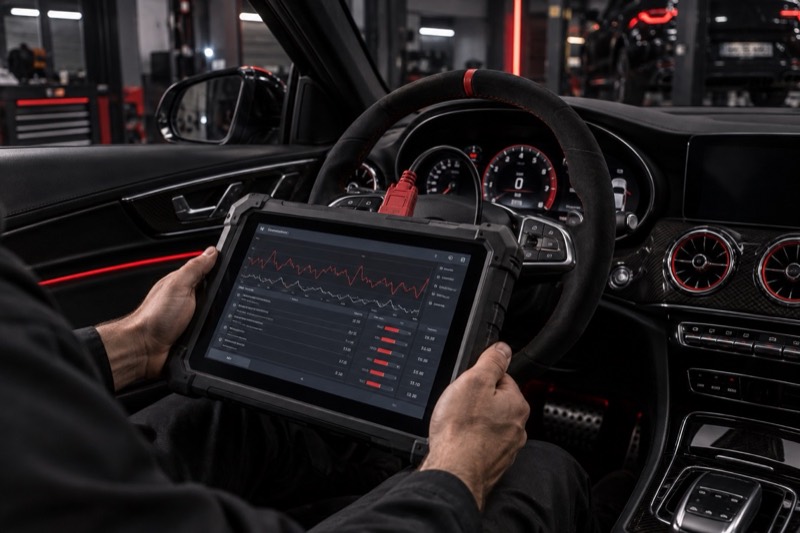
A check engine light is never welcome, but a flashing one deserves more urgency than a steady one. On most vehicles, a blinking light is the engine computer’s way of saying something is happening right now that can cause damage if you keep driving.
Here is what a flashing light usually means, what tends to cause it, and what a sensible response looks like.
Steady versus flashing
A steady check engine light means the engine computer has stored a fault. It could be anything from a loose gas cap to a failing sensor. It still should be checked, but in many cases you can drive carefully to get it diagnosed.
A flashing light is different. On most cars it indicates an active misfire severe enough that the computer is concerned about the catalytic converter. Some vehicles also show a separate warning message or reduce power at the same time.
Why a misfire puts the catalytic converter at risk
When a cylinder misfires, fuel that should have burned in the engine passes into the exhaust unburned. The catalytic converter then tries to burn it off, which can push its temperature far above normal. Over time, or even in a short drive under load, that heat can melt or crack the converter’s internal structure.
A damaged converter can restrict exhaust flow, hurt performance, and cause emissions failures. It is also usually a much bigger repair than whatever caused the misfire in the first place.
Common causes of a misfire
Ignition problems are a frequent culprit: worn spark plugs, a failing ignition coil, or damaged coil boots. Fuel delivery issues are another, including a clogged or leaking injector or low fuel pressure. Vacuum leaks from cracked hoses or intake gaskets can lean out the mixture enough to cause a misfire, especially at idle.
Less often, the cause is mechanical, such as low compression from valve or head gasket problems, or a timing issue. Moisture after a car wash or heavy rain can occasionally trigger a misfire on some engines too. The fault codes point a technician in the right direction, but testing is what confirms the cause.
What to do if the light starts flashing
Reduce your speed, avoid hard acceleration and heavy loads, and plan to get off the road as soon as it is safe. If the engine is running very rough, shaking, losing power, or you smell something hot, it is best to stop and have the vehicle towed rather than drive it further.
Avoid simply clearing the code and continuing on. Clearing it does not fix the misfire, and the light will come back once the computer detects the problem again.
How a proper diagnosis works
A good diagnosis starts with reading the stored and pending codes and the freeze-frame data that shows conditions when the fault happened. From there, a technician can check misfire counts per cylinder, swap or test coils, inspect plugs, look at fuel trims for signs of a vacuum leak, and test injectors as needed.
The goal is to fix the root cause so the engine runs correctly and the emissions system keeps working the way it was designed.
What to have ready when you call
If your check engine light is flashing in Plano or the surrounding DFW area, note the year, make and model, roughly when the light started, and whether it flashes all the time or only under acceleration. Mention any recent work, like new plugs or a battery, and whether the car runs rough.
Call Top Coding at (561) 215-6048 and we will help you figure out the safest way to get the vehicle checked.