
What Is ECU Cloning and When Do You Need It?
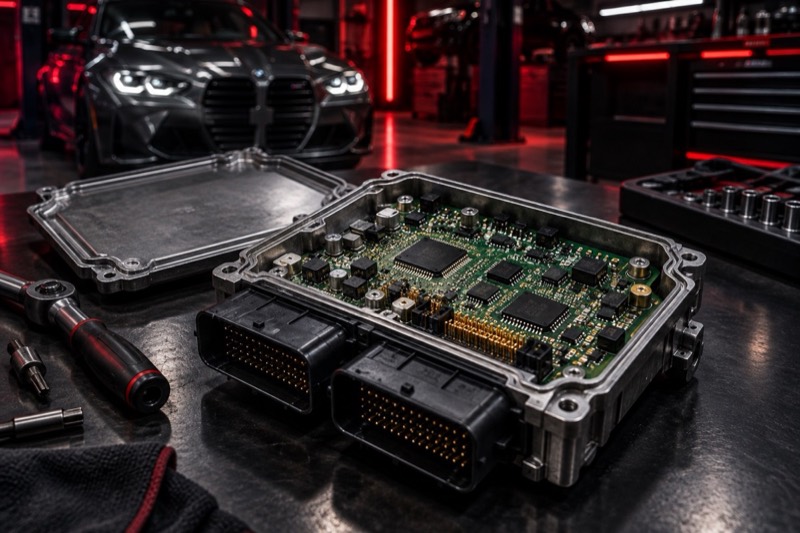
When an engine control module fails, the car may not start, may run poorly, or may throw a string of communication faults. Replacing the module sounds simple, but modern engine computers hold data that is specific to the vehicle they came from, including software calibration, the VIN and, on many cars, immobilizer information that links the engine to the keys.
ECU cloning is one way to deal with that. Here is what it means and when it makes sense.
What cloning actually does
Cloning means reading the data from your original module and writing it to a compatible replacement unit. When it works, the replacement behaves like the original: same software, same vehicle identity and, where applicable, the same immobilizer pairing. The rest of the car sees the module it expects, so the keys and other modules usually don’t need to be re-learned.
The key requirement is that the original module can still be read. Even a unit that has failed in service can often be read on the bench, depending on what failed and the type of module.
When cloning is a good fit
Cloning is commonly used when a module has an internal fault such as a failed driver circuit, water damage or a damaged connector, but its memory is intact. It can also help when a new module from the dealer is unavailable, back-ordered, or would require online programming and security steps that are difficult for a particular vehicle.
It is also used when a used replacement module has been sourced, since a used unit carries the identity of the car it came from and won’t work correctly as-is.
Cloning vs. programming a new module
A new module is typically programmed with the latest software for your vehicle and then set up with the immobilizer and other vehicle-specific data. On many makes this is done through manufacturer-level tools and online access. It is a good option when the original module cannot be read at all, or when an updated software level is needed.
Cloning keeps the exact data from your original module. Which route is better depends on the vehicle, the module, and what failed.
Cloning vs. repairing the original
Sometimes the failure is a specific component on the circuit board that can be repaired, so the original module goes back in the car. Whether that’s realistic depends on the damage. Corrosion, burnt circuits or a failed processor may make repair impractical, in which case cloning to a sound unit may be the better choice.
The risks of mismatched used units
Not every module that fits the connector is compatible. Engine computers often have different hardware versions for different engines, transmissions, markets and model years. A unit with the wrong hardware may not accept your data, or may accept it but cause drivability issues, warning lights or communication problems.
Before buying a used module, it helps to have the part and hardware numbers from your original unit checked. Cloning is meant to keep everything working as designed, including the immobilizer and emissions systems. It is not a way to remove security or emissions functions, and we don’t do that.
Get the diagnosis right first
A module is not always the cause. Wiring faults, poor grounds, low battery voltage and failed sensors can all look like a bad ECU. A proper diagnosis before replacing anything can save time and avoid buying a part you didn’t need.
What to have ready when you call
Have the year, make, model and VIN, the symptoms, any fault codes you’ve been given, and the part numbers from the original module if you can see the label. If you’ve already bought a replacement, have its numbers too. Call Top Coding in Plano at (561) 215-6048 and we’ll talk through whether cloning, new programming or repair fits your vehicle.