
Transponder Keys Explained: Why a Copied Key Won’t Start Your Car
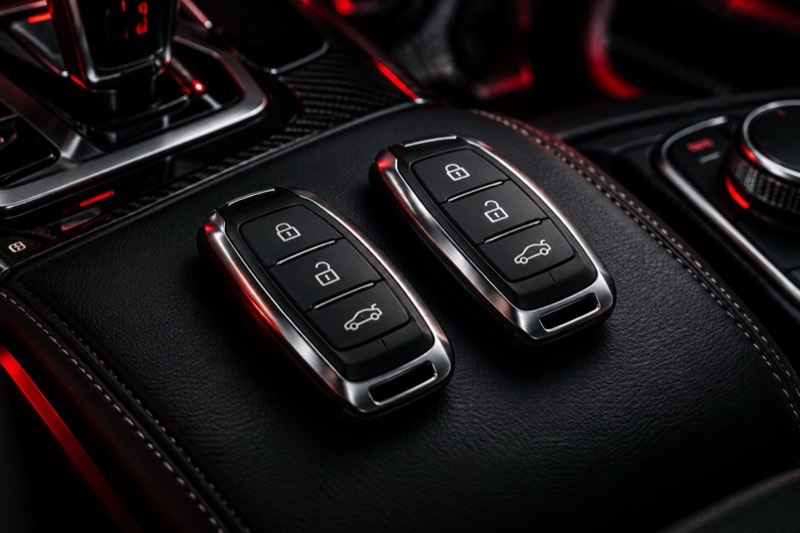
It’s a common surprise: you get a copy of your car key made, it slides into the ignition and turns, and the engine starts for a second and dies, or doesn’t crank at all. The key isn’t defective. It’s missing the part your car actually cares about, the transponder chip.
What a transponder chip is
Most cars built since the late 1990s and early 2000s, depending on the make, have a small electronic chip in the key head or fob. It has no battery of its own for this purpose. When the key is near the ignition, an antenna around the ignition switch or start button area energizes the chip and reads a code from it.
That’s why a transponder key can still start the car even when the remote battery is dead. The lock buttons need the battery, but the chip is powered by the car’s antenna.
How the immobilizer uses that code
The immobilizer compares the code from the chip against the list of keys the car has been taught. If it matches, the engine computer is allowed to run the engine. If it doesn’t, the car may refuse to crank, or it may start briefly and shut off. On many vehicles a security light on the dash flashes or stays on to show the key wasn’t accepted.
Older systems used a fixed code. Many newer ones use encrypted, changing exchanges between the key and the car, which makes them much harder to defeat and is part of why vehicle theft by simple key copying has dropped.
Why a cut-only copy won’t start the car
A hardware store or kiosk copy usually reproduces only the metal blade. That’s enough for the door lock and, on many cars, to turn the ignition. Without a chip the car recognizes, though, the immobilizer does its job and blocks the engine. The copy is still handy as a door key, but it isn’t a working spare.
Cloning versus programming
There are two general ways to make a new chip work. Cloning copies the data from an existing working key onto a compatible new chip, so the car sees it as the same key. Programming teaches the car a brand-new key, adding it to the vehicle’s memory alongside the others.
Which method is possible depends on the vehicle and the type of transponder. Cloning isn’t available for every system, and programming may require specialized equipment, a working key, or the car’s security information. Programming also lets lost keys be removed from the car’s memory on many vehicles, which cloning can’t do.
Signs of a failing transponder
Chips are durable, but keys get dropped, soaked and worn. Warning signs include the car not starting on the first try, a security light that flickers when you turn the key, or a key that works only when held at a certain angle. If your spare works fine and your daily key doesn’t, the key is the likely suspect. If neither works, the problem may be in the car’s antenna, immobilizer or a related module.
What to have ready when you call
Have your year, make, model and VIN, and let us know how many working keys you have and what symptoms you’re seeing. We’ll need proof of ownership and a photo ID for any key work.
If you’re near Plano or elsewhere in DFW, call Top Coding at (561) 215-6048 and we’ll tell you whether your key can be cloned, programmed, or both.